Language
What are the operating methods of electric wheelchairs?
The operation methods of electric wheelchairs usually include the following:
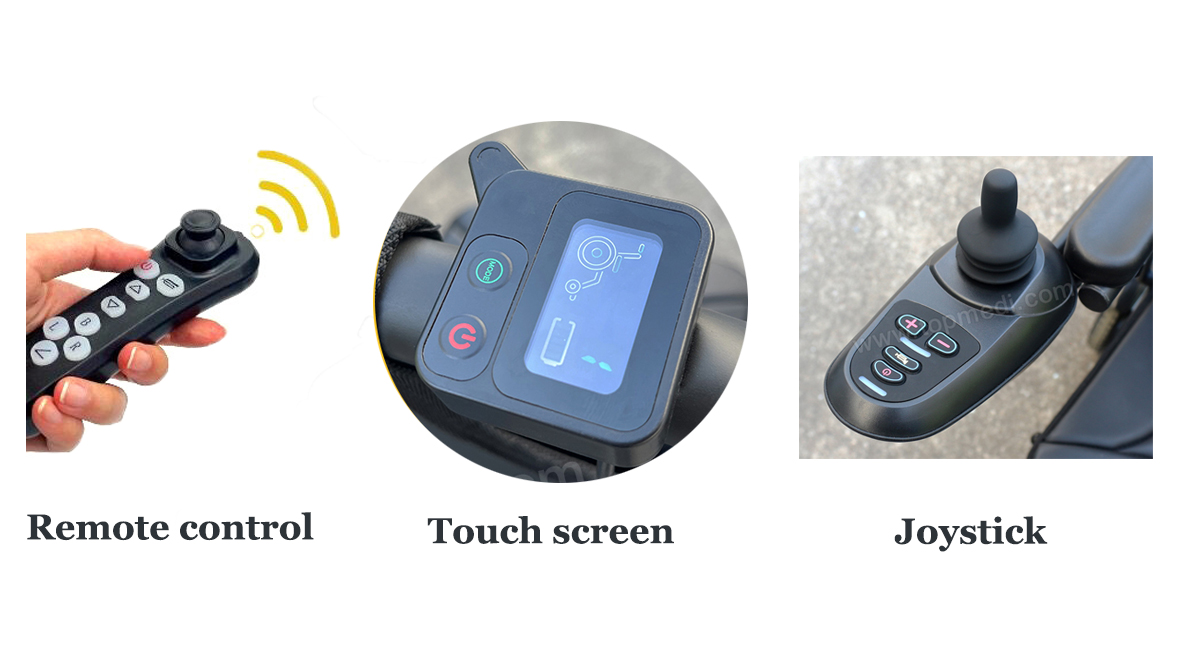
1. Manual controller:
Traditional joystick or joystick control controls the forward, backward, and steering of a wheelchair by pushing the joystick forward, backward, left, and right. There may also be a speed adjustment button on the joystick to adjust the driving speed.
2. Remote control operation:
Some advanced intelligent electric wheelchairs are equipped with wireless remote controls, which allow caregivers or users to remotely drive within a certain distance, especially suitable for those who cannot directly operate the wheelchair.
3. Touch screen/smartphone app control:
Modern intelligent electric wheelchairs can be finely set and operated through a built-in touch screen interface or connected to smartphone applications, such as preset routes, setting speed limits, checking battery status, etc.
4. Speech recognition system:
High tech electric wheelchairs may have voice commands, allowing users to start, stop, turn, or adjust speed through simple voice commands.
5. Head control system/eye tracking technology:
For users with severe physical disabilities, electric wheelchairs can also be equipped with advanced head control systems or eye tracking devices, allowing users to control the direction of wheelchair movement through head movements or eye movements.
6. Adaptive Control System: Advanced adaptive control electric wheelchairs can learn user habits and preferences, and automatically adjust control parameters according to environmental changes, providing a more intelligent and personalized driving experience.
7. Sensory control: A few high-tech electric wheelchairs may use sensory control technology to drive and control by sensing the user's body posture or muscle activity signals.
The operation methods of electric wheelchairs are diverse and user-friendly, aiming to meet the needs of users with different physical conditions and ability levels.
