Language
1. What Is a Commode Chair and Who Needs It?
A commode chair is a portable toilet chair that can be placed beside a bed or in any room. It consists of a seat with a removable bucket underneath. Some models are designed to roll over a standard toilet (over‑toilet commode), while others are standalone units.
Commode chairs are typically used by:
Post‑surgery patients who cannot walk to the bathroom.
Elderly individuals with balance issues or nighttime urgency.
People using wheelchairs who need a higher, stable surface for transfer.
Bedridden patients in home hospice or long‑term care.
2. Key Features of a Durable Commode Chair
2.1 Frame Material and Construction
The frame material determines the chair‘s weight capacity, longevity, and ease of cleaning.
Steel (powder‑coated): Most common. Strong, affordable, and durable. Steel frames with a rust‑resistant finish can last for years. Weight capacity typically 120 kg to 180 kg.
Aluminum: Lighter than steel, corrosion‑proof, but less load capacity (usually up to 120 kg). Best for travel or for users who frequently move the chair.
Stainless steel: Highly durable, easy to sterilize, and rust‑proof. Used in institutional settings. More expensive.
For home use, powder‑coated steel offers the best balance of durability and cost.
2.2 Weight Capacity and Bariatric Options
Standard commode chairs support up to 120 kg (265 lbs). For heavier users, bariatric models offer reinforced frames and wider seats, supporting 180 kg to 250 kg (400 to 550 lbs). Always check the rated weight capacity before purchase.
2.3 Seat Height Adjustability
Users of different heights require different seat heights. Look for chairs with multiple height settings (typically 45 cm to 60 cm from floor to seat). Some models have push‑button or twist‑pin leg extensions.
2.4 Bucket Material and Removal Mechanism
The bucket (pail) is usually made of polypropylene – lightweight, chemical‑resistant, and easy to clean. Durable commode chairs feature a bucket with a tight‑fitting lid and a carrying handle for emptying. Bucket removal should be possible from the rear (behind the user) without tipping the chair.
2.5 Armrests and Backrest
Armrests: Padded or plastic, flip‑up or removable. Flip‑up armrests allow easier side transfers from a bed or wheelchair.
Backrest: A contoured, padded backrest improves comfort. Some chairs have a removable backrest for compact storage.
2.6 Floor Stability and Leg Tips
Rubber leg tips prevent slipping and protect floors. Look for non‑skid, oversized tips on all four legs. Chairs with braked casters (for wheeled commode chairs) are useful for positioning.
2.7 Easy Cleaning and Maintenance
Durable commode chairs have smooth, seamless surfaces without crevices where bacteria can accumulate. Removable armrests and backrests allow thorough cleaning. The bucket and seat should be dishwasher‑safe (top rack) or easily disinfected with bleach solution.
3. Types of Commode Chairs
Standard bedside commode: 3‑ or 4‑leg design, stationary, with a bucket. Most common for home use.
Rolling commode (with casters): Has small wheels (with brakes) for easy repositioning. Some models double as a shower chair.
Over‑toilet commode: Fits over a standard toilet. Often height‑adjustable and foldable for travel. No bucket – uses the toilet bowl.
Bariatric commode: Wider seat (50 cm+), reinforced steel frame, higher weight capacity (up to 250 kg).
Pediatric commode: Smaller seat and lower height.
4. Top Picks for Durable Commode Chairs
4.1 TopMedi Heavy‑Duty Steel Commode Chair (Model TCM-500)
The TCM-500 is a rugged bedside commode chair designed for daily use in home or institutional settings. Features include:
Powder‑coated steel frame with a weight capacity of 150 kg.
Seat height adjustable from 47 cm to 57 cm (5 settings).
Tool‑free assembly – legs snap into place.
Padded flip‑up armrests and padded backrest.
Large, easy‑to‑remove bucket with lid and handle.
Oversized non‑skid rubber tips on all legs.
Overall dimensions: Width 52 cm, depth 52 cm, height adjustable.
Seat dimensions: 41 cm wide × 42 cm deep.
Weight of chair: 8.5 kg.
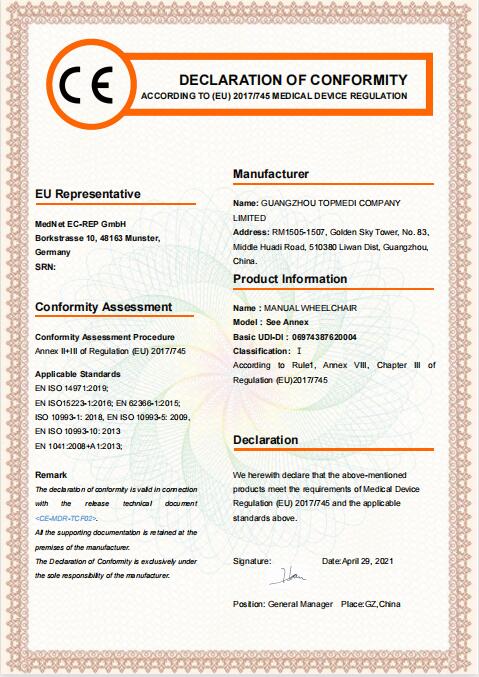
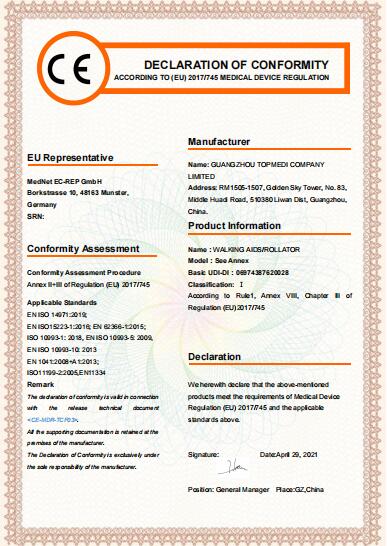
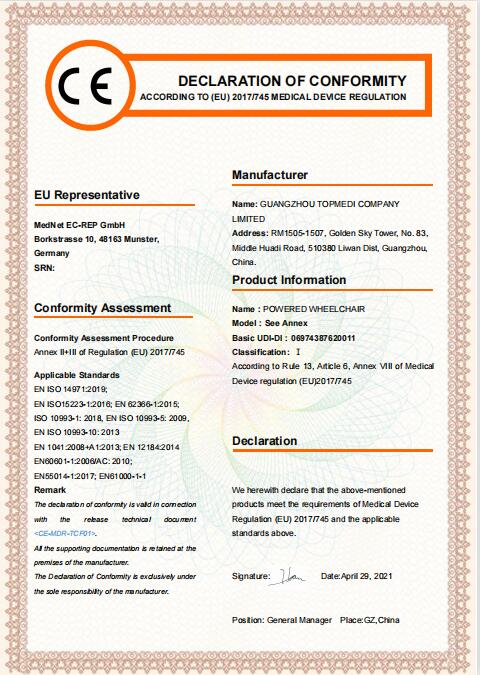
The TCM-500 is CE certified and comes with a 2‑year warranty on the frame. It is a reliable, budget‑friendly option (approx. US 120) suitable for most home care situations.
4.2 TopMedi Bariatric Commode Chair (Model TCM-B200)
For users requiring extra strength and space, the TCM-B200 offers:
Reinforced steel frame with weight capacity 200 kg.
Extra‑wide seat (51 cm width) and wider overall stance (62 cm width).
Height adjustable from 48 cm to 60 cm.
Flip‑up padded armrests and padded backrest.
Large bucket with lid and pour spout.
Non‑skid leg tips with larger diameter.
Frame finish: Rust‑resistant epoxy powder coating.
This model is ideal for home care agencies and long‑term care facilities. Price range: US 180.
4.3 TopMedi Rolling Commode / Shower Chair (Model TCM-R550)
The TCM-R550 is a 2‑in‑1 rolling commode that also functions as a shower chair. Features:
4 locking casters (75 mm diameter) for easy movement and secure parking.
Aluminum frame – lightweight (6.8 kg), corrosion‑proof for wet environments.
Weight capacity 120 kg.
Tool‑free height adjustment (48 cm to 58 cm).
Removable padded armrests and backrest.
Bucket with lid removes from behind.
Slip‑resistant seat with drainage holes (shower mode).
Folds flat for storage and travel.
The TCM-R550 is perfect for users who need a bedside commode and a safe shower seat. Price: US 140.
4.4 TopMedi Over‑Toilet Commode (Model TCM-OT1)
For users who can walk to the bathroom but need assistance, the TCM-OT1 fits over a standard toilet. Features:
Steel frame with weight capacity 120 kg.
Height adjustable from 46 cm to 56 cm.
Arms flip up for side transfers.
Splash guard included.
Foldable design – folds to 10 cm thickness for travel.
Rubber floor tips prevent sliding.
No bucket – directs waste into toilet.
Price: US 80. Excellent for travel or temporary use.
4.5 Drive Medical 3‑in‑1 Roller Commode (Competitive Reference)
The Drive Medical 3‑in‑1 Roller is a popular North American model. It features a steel frame, 4 locking casters, padded armrests, and a bucket. Seat height adjusts from 46 cm to 56 cm. Weight capacity 136 kg. It costs around US 150. However, TopMedi‘s equivalent offers similar quality at a lower price for international buyers.
5. How to Choose the Right Commode Chair: A Practical Guide
Step 1: Assess the user‘s mobility. Can they stand and pivot? If yes, a standard bedside commode or over‑toilet version is sufficient. If they need to be wheeled, choose a rolling commode.
Step 2: Determine weight capacity. Weigh the user or estimate. Add a safety margin of 20 kg. For users over 120 kg, a bariatric model is essential.
Step 3: Measure space. Bedside commodes need at least 70 cm × 70 cm floor space. Rolling models need more room to maneuver.
Step 4: Decide on adjustability. Height‑adjustable legs accommodate different bed heights and user leg length. Crucial for preventing back strain during transfers.
Step 5: Consider cleaning ease. Removable armrests and backrests, plus a bucket with a lid and handle, make daily maintenance much easier.
Step 6: Check for stability. Chairs with wide leg stance and non‑skid tips are safer. Avoid chairs with narrow bases or plastic legs.
6. Materials: Pros and Cons
| Material | Pros | Cons | Best for |
|---|---|---|---|
| Powder‑coated steel | Strong, affordable, stable | Heavier (8‑10 kg), can rust if coating chips | Home care, institutional |
| Aluminum | Lightweight (5‑7 kg), no rust | Lower weight capacity, more expensive | Travel, wet areas (shower) |
| Plastic (frame) | Very light, cheap | Not durable, low weight capacity (< 100 kg) | Temporary use only |
7. Maintenance and Sanitizing Tips
Daily: Empty and rinse the bucket with warm water and mild detergent. Wipe seat and armrests with disinfectant wipe.
Weekly: Remove the bucket and wash with bleach solution (1 part bleach to 10 parts water). Inspect leg tips for wear.
Monthly: Check all bolts and leg adjustment pins for tightness. Lubricate caster wheels (if rolling model) with silicone spray.
If rust appears on steel frame: Sand lightly and apply touch‑up paint (rust‑inhibitive).
8. Safety Warnings
Never exceed the chair‘s weight capacity – this can cause collapse and serious injury.
Always lock casters before use (rolling models).
Ensure the bucket is fully inserted and the seat is securely attached.
Do not use a commode chair as a shower chair unless it is specifically designed for wet environments (aluminum frame, drainage holes).
9. Conclusion
A durable commode chair is a long‑term investment in patient comfort and caregiver safety. Prioritize powder‑coated steel frames, adjustable height, flip‑up armrests, and a bucket that is easy to remove and clean. TopMedi offers a complete range of commode chairs – from the standard TCM-500 (budget‑friendly and robust) to the TCM-B200 (bariatric) and the TCM-R550 (rolling shower commode). For travel or over‑toilet use, the TCM-OT1 provides foldable convenience. All TopMedi commode chairs are CE certified and built to withstand daily use. By selecting the right model for the user‘s weight, mobility level, and environment, you can ensure safety, dignity, and long‑term reliability.

Comprehensive service with timely feedback-We have a comprehensive after-sales service system and offer 24-hour consultation service with a full-time staff.

Cost-effective products with quality assurance-We have won the recognition and support of many domestic customers and our product pass the ISO, SGS, TUV, CE, FDA, etc.

We have cooperated with many national government agencies for many years, such as Spain, New Zealand, Australia, South Korea, etc.

Professional manufacturers produce all kinds of medical rehabilitation equipment