Language
Starting from 2004, to now having its products found in hospitals, pharmacies, and rehabilitation centers across Australia, the United States, the United Kingdom, France, and Spain, Topmedi has dedicated 22 years to one singular mission: to infuse warmth into rehabilitation aids and to make "Made in China" synonymous with reliability. Recently, we visited this enterprise to uncover the story behind its remarkable global journey.
Stepping into Topmedi's showroom, the product range is comprehensive: from sports wheelchairs and pediatric cerebral palsy chairs to electric mobility scooters, height-adjustable shower chairs, patient lifts, and beach wheelchairs. Their portfolio covers virtually every scenario, from hospital rehabilitation to home care.
"We are not simply a processing factory operating on specifications," a Topmedi representative stated. "Over the past 22 years, what we've built is a complete, integrated system encompassing R&D, design, production, quality control, and after-sales service."
The ultimate validator of this system is the world's most demanding market: the European Union.
The Western medical device market is notoriously difficult to penetrate, known for its stringent regulations and high standards. How did Topmedi manage to open this door?
Cornerstone One: Building Trust with International Certifications
The walls of Topmedi's facility are lined with various certifications. These go beyond the industry-standard CE mark and the ISO 13485 quality management system for medical devices. Crucially, these certifications are issued by NQA, a body accredited by UKAS (United Kingdom Accreditation Service) , and the company's certification process was audited by the globally recognized inspection and certification group BUREAU VERITAS.
This signifies that Topmedi's product quality doesn't just meet EU standards; the company itself has undergone rigorous scrutiny from top-tier international third parties. Furthermore, Topmedi has also passed audits by SGS. These formidable credentials serve as its "calling card" of credibility, essential for gaining a foothold in Western markets.
Cornerstone Two: Mastering Core Competitiveness through Independent R&D
An OEM model always leaves a company dependent on others. Topmedi recognized this early on and established its own R&D team dedicated to creating innovative products tailored to the specific needs of diverse user groups. From dedicated shower chairs for children with cerebral palsy, to foldable mobility scooters that can be taken on an airplane, to electric patient lifts with a 200kg capacity, each product reflects a deep understanding of genuine user pain points.
Cornerstone Three: Winning Long-Term Trust with Comprehensive Quality Control
"Exporting isn't about making a quick sale." Topmedi has implemented a rigorous quality control system that oversees the entire process, from the moment raw materials enter the factory to the final packaging of finished products. This unwavering commitment to quality has not only made Topmedi a strategic partner for numerous established overseas companies but has also earned it government supplier status in several countries. Their products can even be seen at international events like the Paralympic Games.
A statement on Topmedi's website reads: "Dedicated to providing cost-effective medical products for the elderly and people with disabilities." While this might sound like a standard corporate mission, truly understanding its weight requires 22 years of dedication.
In product development, this "empathy" translates into countless thoughtful details: armrests that flip up for easier lateral transfers, anti-slip textures on shower chairs for wet environment safety, and the one-button folding feature on scooters designed to ease the burden on family caregivers. These are the details you'll never find on a cold specification sheet, yet they are felt by the user every single day.
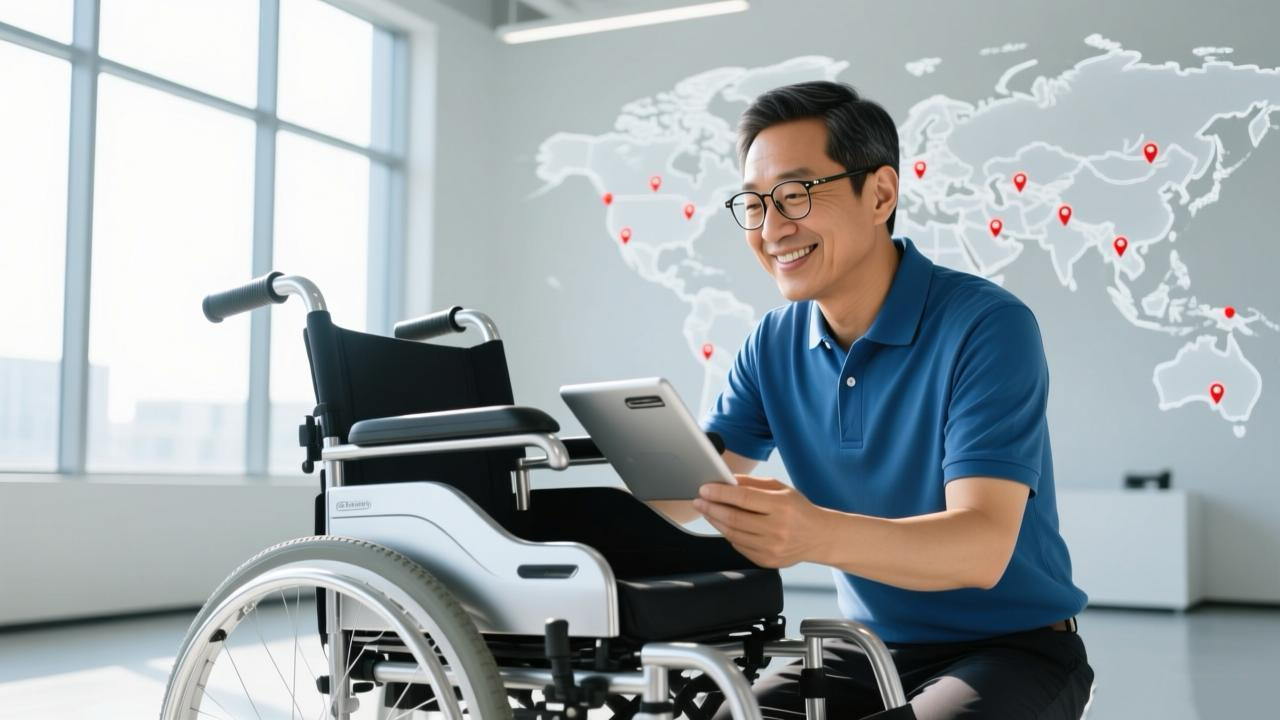
Today, Topmedi's products reach over 80 countries worldwide, spanning from Australia and New Zealand in Oceania, to the United States in North America, across Europe including the UK, France, and Spain, and even into the UAE in the Middle East. On the streets of Europe, in rehabilitation centers across North America, and in hospitals throughout the Middle East, more and more people are using rehabilitation aids manufactured by this Chinese company.
Twenty-two years may be just a blink in the long arc of history. But for a company, it's a period long enough to witness countless booms and busts. While many competitors chased quick profits in fleeting market trends, Topmedi chose a slower, more challenging path: dedication to craft and winning the market with integrity.
It's a path with no shortcuts, but every step has built a solid foundation.
When asked about future plans, Topmedi's response was characteristically straightforward: "To continue doing one thing well: enabling more people to use safe and comfortable rehabilitation aids." This simple, persistent dedication might just be the most powerful passport for "Made in China" on its journey to the world.
Unlike the traditional foot outline extraction method, the outline of TOPMEDI is produced using the advanced digital technology and CAD mold designing technique.