Language
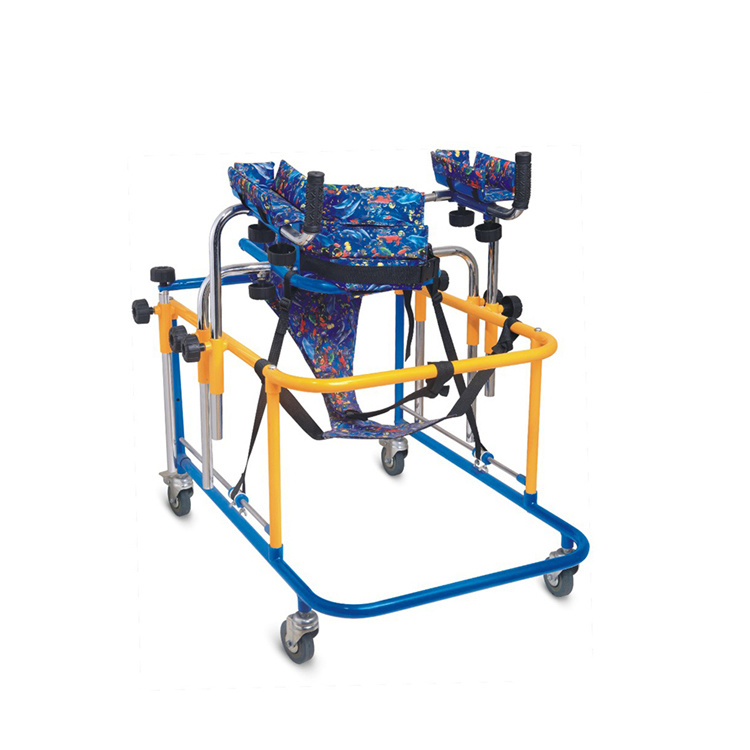
Undeniably, the original design of the baby walker is full of appeal:
Frees Parents’ Hands: Placing a baby in a walker seems to give parents a moment of respite.
Provides Mobile Fun: Babies can use it to “walk” to farther places, explore their surroundings, and gain a sense of satisfaction.
Seemingly Aids Walking: Intuitively, it supports the baby, seemingly helping them practice walking.
It is these obvious “advantages” that once made the walker a standard item in many households. However, beneath this beautiful facade lie risks that many parents overlook.
To understand the problem with walkers, we must first understand the science of how a baby learns to walk. True walking is a process that begins with crawling, followed by constant attempts to pull up to a stand, stand alone, squat, and get up, ultimately relying on their own muscle strength and sense of balance. The baby walker,恰恰相反, can interfere with or even hinder this natural process.
1. Incorrect Muscle Activation Patterns
In a walker, a baby typically moves by tiptoeing, pushing off the ground with their toes. This is not a normal walking posture. Real walking requires the heel to strike first, completed through the coordinated effort of the leg, gluteal, and core muscle groups. Long-term reliance on a walker can reinforce incorrect muscle activation habits in the baby’s calves and ankles, actually obstructing the normal process of learning to walk.
2. Weakened Sense of Balance and Core Strength
A sense of balance is the cornerstone of learning to walk. When a baby independently tries to stand and walk, their body constantly adjusts and wobbles. This process is precisely what trains their vestibular system and core muscle groups. A walker provides a stable external support, allowing the baby to bypass this crucial “self-training” phase. It’s like putting training wheels on a bicycle; while you might not fall, you never truly learn to balance.
3. Increased Safety Risks
This is a fact that runs counter to intuition but is critically important: baby walkers can increase the risk of injury to a baby.
Excessive Speed: In a walker, a baby can easily reach a speed of 1 meter per second, far exceeding what they can control on their own, making it easy to crash into furniture or stairs.
Reaching Dangerous Items: A walker increases a baby’s “height” by 20-30 cm. Items that were previously out of reach, such as kettles, table corners, and electrical outlets, can become new hazards.
Tipping Risk: On uneven surfaces (like the edge of a carpet or a doorstep), walkers have a risk of tipping over.
It is precisely because of these safety hazards that the American Academy of Pediatrics (AAP) publicly recommended years ago that parents not use baby walkers. Canada went even further, banning their sale and advertising as early as 2004.
To ensure the information is authoritative, we have referenced the world’s top health organizations:
American Academy of Pediatrics (AAP): Clearly states that baby walkers are associated with serious injuries in infants and strongly opposes their use. They believe walkers hinder normal muscle development and increase the risk of falls and stair-related accidents.
World Health Organization (WHO): In its “Guidelines on developmental monitoring and care,” the WHO emphasizes that gross motor development in infants and young children should follow natural patterns. It encourages promoting development through activities like tummy time, crawling, and free exploration, and does not list walkers as a recommended assistive device.
Since walkers are not recommended, how can we scientifically help our babies when they show a desire to walk? Topmedi provides you with the following safer and more effective alternatives:
Create a Safe Exploration Environment: This is the most important step. Childproof your home to create a “baby-friendly” safe zone. Remove sharp corners, cover electrical outlets, and ensure the floor is level. A safe home is the best “walker” for your baby.
Encourage More Crawling: Crawling is a golden period for a baby’s gross motor development. It excellently exercises their neck, back, limb muscles, and coordination, laying a solid foundation for future walking.
Use Sturdy Furniture or a Baby Push Walker: Babies can practice by pulling up on stable furniture like sofas and coffee tables. There are also “baby push walkers” (toys) on the market that the baby pushes themselves. These toys can encourage upright walking, but only if the cart is heavy enough and structurally stable to prevent tipping.
Patient Parental Companionship: The best “assistive device” is always a parent’s hands and encouragement. Bend down, hold your baby’s hands, and give them secure support. Stand behind them, holding their hips with both hands, letting them feel the rhythm of walking.
Returning to the original question: Is a baby walker a “walking miracle” or a “developmental trap”? The answer is now self-evident. It is more like a beautiful “developmental trap,” trading a baby’s long-term motor development and safety for short-term convenience.
As parents, we all want to give our children the best. But “the best” is not always the most expensive or the most convenient; it is what is most scientific and aligned with the laws of growth. Giving up the baby walker and choosing safer, more natural guidance methods is a wise choice that is responsible for your baby’s growth.
At Topmedi, we have always believed that true care stems from a deep understanding of and respect for the laws of life development. Let us work together, using scientific knowledge and patient companionship, to guard every firm and adorable step our babies take.